
Safety information
Safety information
Toxicity: Mild for humans, but injurious to horses that eat much of it (Grieve). Modern: contains pulegone-type volatile compounds; large amounts best avoided; toxic to horses.
Contraindications: None specified by source. Practical: avoid in pregnancy and large/long-term doses (pulegone).
Interactions: None specified by source.
Pregnancy & breastfeeding: Avoid (pulegone) (modern).
Evidence level
Reported in folk medicine sources; not clinically validated. Folk and historical sources have not been validated by clinical research.
Preparations
Gill Tea infusion, fluid extract, expressed fresh juice (snuffed), poultice, eyewash; to clarify/flavour ale · herb
Part used: herb
Traditional use: long-standing coughs, consumption, pulmonary and kidney complaints, indigestion; congestive headache and tinnitus (snuffed juice); antiscorbutic; topical for bruises and sore eyes(Folk and historical sources have not been validated by clinical research.)
Proposed mechanism: diuretic, astringent, tonic; long discarded from Materia Medica (Grieve); no modern clinical support
Associated conditions
Edibility
Edible parts: marginal - historically used to flavour/clarify ale (Alehoof); not recommended as a food today
Toxic lookalike warning
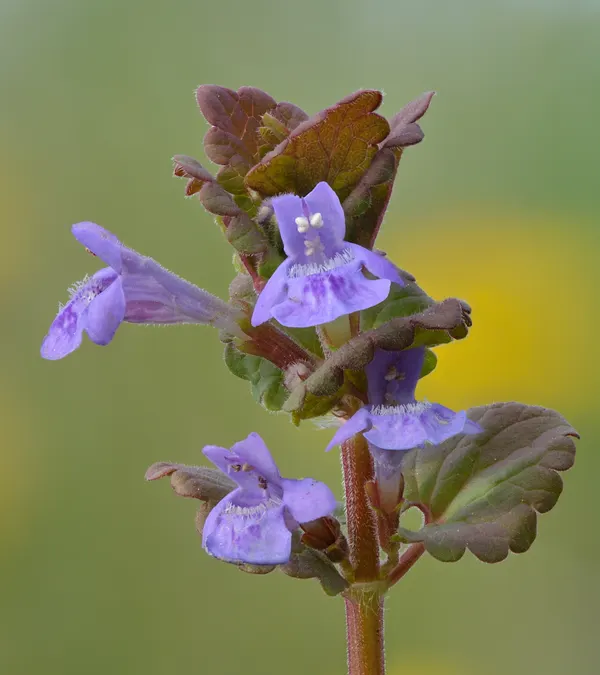
A low creeping mint-family plant; positively identify by the square stem, kidney-shaped scalloped leaves, balsamic smell and bluish two-lipped flowers before any use.
Nutritional notes
Not relevant.
Healing traditions
Related plants
Sources (1)
- Grieve M., A Modern Herbal (1931) — Maud Grieve (1931)
Sourcing & resources
Affiliate links — we may earn a small commission at no extra cost to you.